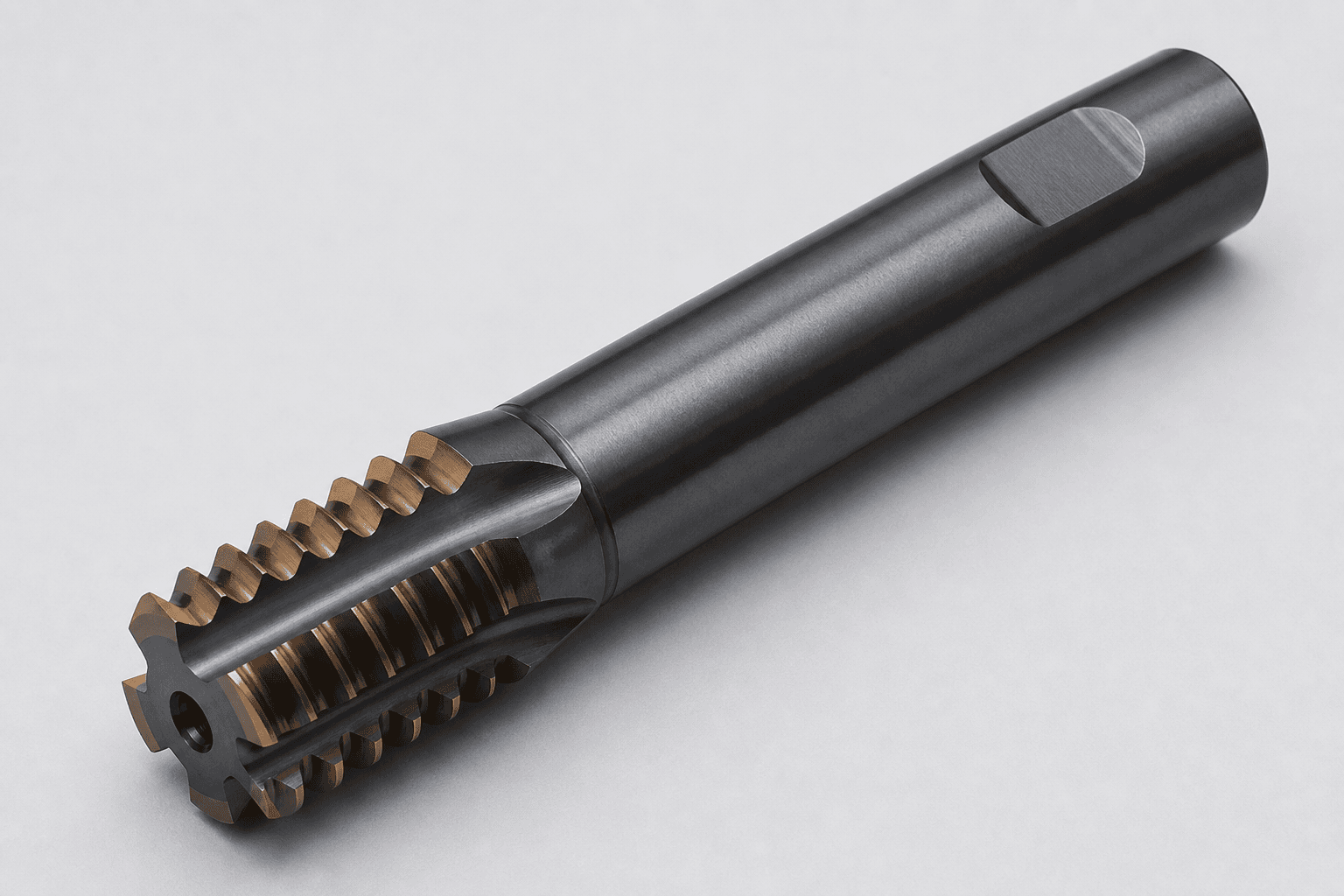
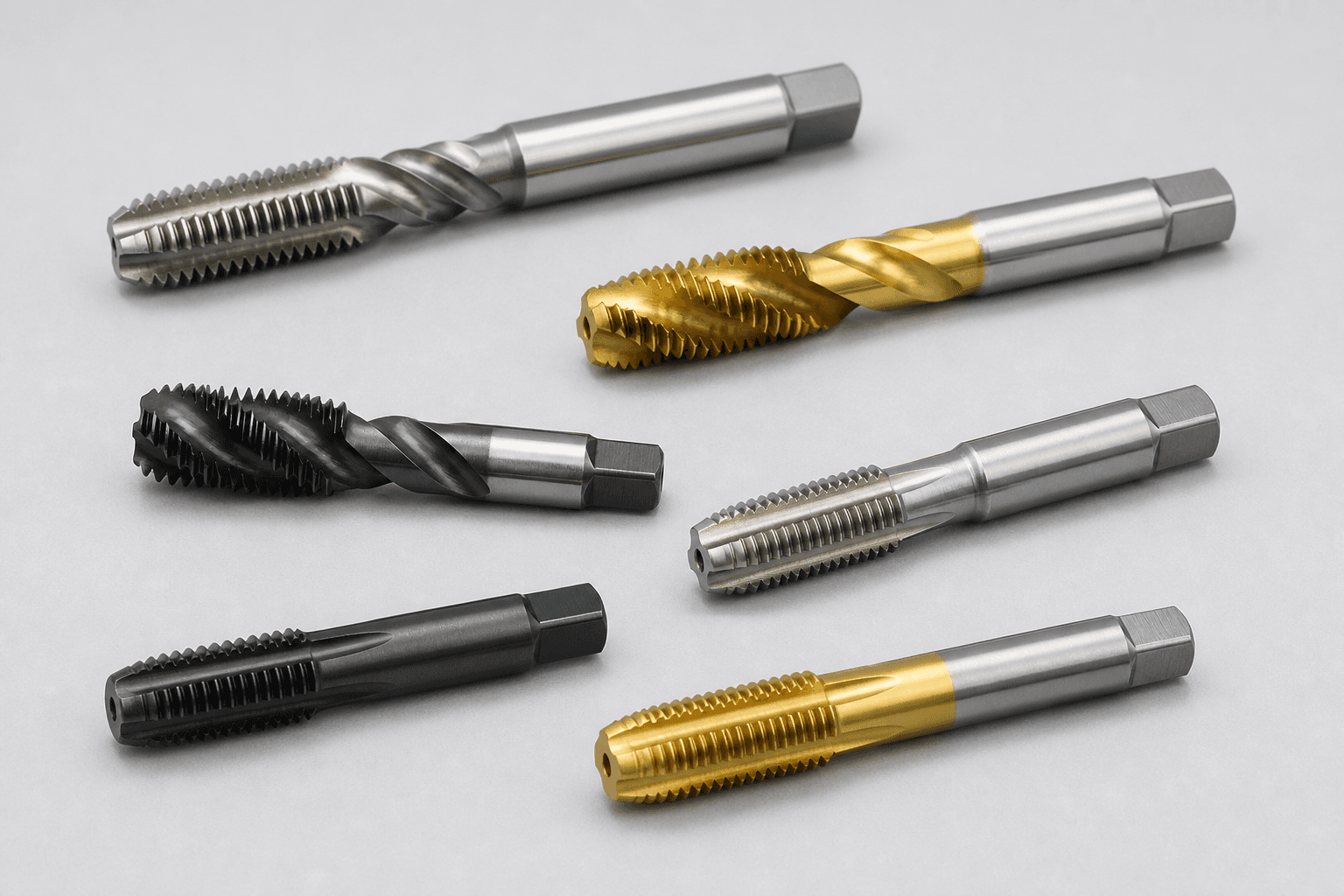
Thread milling or tapping: the hole usually decides
Tapping is faster per hole and always will be. That stops mattering the moment the hole is expensive, blind, hardened or thin-walled.
For an M8 through hole in mild steel on a rigid machine, a tap wins on cycle time and it is not close. The interesting cases are the ones where cycle time is no longer the constraint.
Four situations where milling wins
- The component is nearly finished. A tap that breaks is inside the part; a thread mill that breaks comes out with the tool holder.
- The hole is blind with little run-out room. A thread mill reaches full depth with a clean thread and no bottoming risk.
- The material is above 45 HRC, where a tap has no realistic service life and a carbide thread mill does.
- The wall is thin. Thread milling applies a fraction of the radial and axial load, so the bore stays round.
What milling costs you
Cycle time, mainly — a helical interpolation takes two to four times as long as a tapping cycle on small threads. It also demands a machine with true circular interpolation accuracy, because any backlash shows up directly as thread profile error. On an older machine with measurable lost motion, a tap will produce a better thread than a mill.
The forming tap, often overlooked
Where the material has enough ductility — aluminium, low-carbon steel, austenitic stainless below about 800 N/mm² — a forming tap produces no chips at all and leaves a thread with a cold-worked surface that is measurably stronger than a cut one. In blind holes it removes the chip evacuation problem entirely. It needs a larger and more accurate pilot hole, which is exactly the kind of detail that gets missed when the tool is swapped in without changing the drill.
Choose by the cost of the hole, not by the cost of the tool. On a part that has had four hours of machining put into it, the threading operation is insurance.